Whitewater Paddles: How to Choose the Right Paddle for River Running
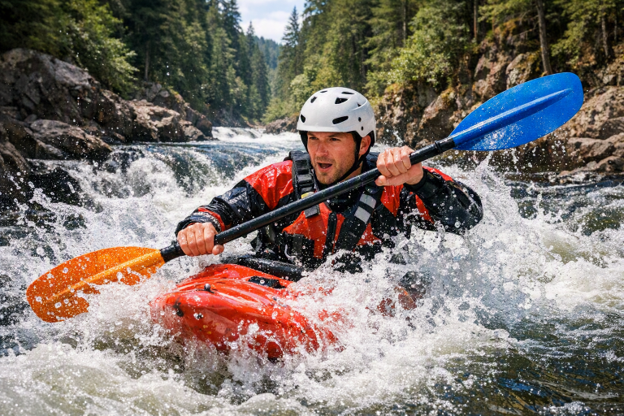
A practical guide to paddle materials, blade shapes, sizing, and river-ready features for beginner and intermediate whitewater kayakers.

A good whitewater paddle should feel powerful, durable, and easy to control when the river gets pushy.
In whitewater kayaking, your paddle is more than a way to move forward—it is your accelerator, brake, rudder, brace, and sometimes your best chance to stay upright. The right paddle helps you punch through waves, catch eddies cleanly, ferry across current, and recover quickly when the river changes faster than expected.
What Makes a Whitewater Paddle Different?
Whitewater paddles are usually shorter, stronger, and more aggressive than recreational or touring paddles. Their blades are designed for quick power, because river paddlers often need instant acceleration and precise boat control rather than long, relaxed cruising strokes.
Most whitewater paddlers use a high-angle stroke, which means the paddle shaft is more vertical and the blade enters the water closer to the kayak. This stroke style gives stronger bite, better turning control, and faster corrections in rapids.
Key Features to Compare
1. Blade Shape
Whitewater blades are typically wide and powerful. Bigger blades catch more water and create stronger strokes, which can help on steep creeks, big-volume rivers, and technical moves. Smaller blades are easier on the shoulders and can be better for newer paddlers, smaller paddlers, or anyone who values quick cadence over maximum force.
2. Shaft: Straight or Bent?
A straight shaft is simple, durable, and usually less expensive. A bent shaft places your wrists in a more natural position, which many paddlers find more comfortable during long days or powerful strokes. Bent shafts often cost more, but they can reduce wrist strain and improve hand placement consistency.
3. Materials
- Plastic or nylon blades: durable and affordable, but heavier and less efficient.
- Fiberglass blades: a strong middle ground with better stiffness, lower weight, and good value.
- Carbon fiber: light, stiff, and responsive, but usually more expensive and less forgiving of hard rock abuse.
- Reinforced tips and edges: helpful for paddlers who regularly hit rocks, boof drops, or push off shallow riverbeds.

How to Size a Whitewater Paddle
Whitewater paddles are commonly shorter than touring paddles because paddlers need fast cadence, close control, and a high-angle stroke. Many adult whitewater paddles fall roughly in the 190–203 cm range, but the best size depends on your height, boat type, paddling style, and shoulder comfort.
| Paddler / Style | Typical Starting Point | Why It Works |
|---|---|---|
| Smaller paddler or playboater | Shorter paddle | Quicker cadence and easier control in tight moves. |
| River runner | Mid-range length | Balances power, reach, and maneuverability. |
| Creeker or taller paddler | Slightly longer paddle | More leverage for boofs, ferries, and powerful strokes. |
Feather Angle and Hand Control
Feather angle is the offset between the two blades. Some paddlers prefer no feather for simplicity and symmetry, while others use a moderate feather to reduce wind resistance and make recovery strokes feel smoother. Beginners should start with a comfortable, low-to-moderate feather and prioritize relaxed wrists over copying someone else's setup.
Buying Tips for Your First Whitewater Paddle
- Choose durability first if you paddle rocky rivers or are still learning.
- Go lighter if you paddle long runs, have shoulder fatigue, or paddle frequently.
- Try both straight and bent shafts before investing in a premium model.
- Use manufacturer sizing charts as a starting point, then adjust based on comfort and technique.
- Do not ignore safety gear: always paddle with a properly fitted helmet, PFD, and appropriate river partners.
Final Takeaway
The best whitewater paddle is not always the lightest or most expensive—it is the one that helps you paddle confidently, protect your joints, and make clean moves in the water you actually run. Start with a durable, properly sized paddle, build good technique, and upgrade as your skills and river goals become clearer.