Types of Whitewater Kayaks
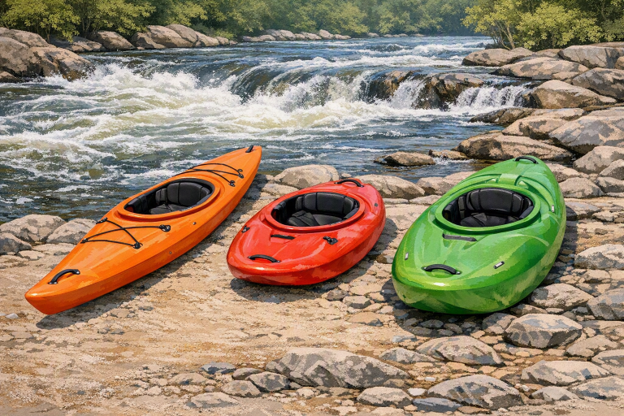
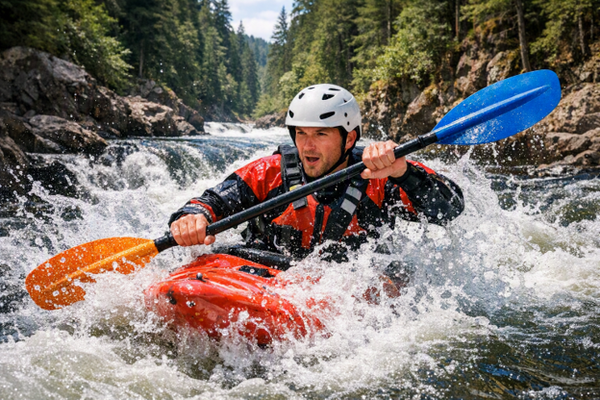
Whitewater kayaks are highly specialized craft designed to respond to turbulent currents, complex river features, and rapidly changing hydraulic forces. Although river runners, playboats, and creek boats share the same general purpose—maneuvering through moving water—their hull shapes, volume distribution, rocker profiles, and stability characteristics create very different performance outcomes. Selecting the most appropriate design requires evaluating the paddler's experience level, the technical demands of the river, and the intended style of paddling.

River Runners
River runners are designed to provide balanced performance across a wide range of whitewater environments. Their moderate length and controlled rocker allow them to maintain speed and tracking while still remaining maneuverable in rapids. Compared with playboats, river runners generally offer greater volume and stability, which helps paddlers move efficiently through waves, eddies, and moderate drops. Because they combine predictability, responsiveness, and downriver efficiency, river runners are often considered one of the most practical choices for developing paddlers as well as experienced paddlers who want a versatile boat for everyday river use.
Playboats
Playboats are engineered for freestyle performance rather than long-distance river travel. Their short length, low volume, and planing hulls allow the boat to spin, surf, cartwheel, and release from waves or holes with greater ease. These design features make playboats highly responsive, but they also reduce speed, tracking, and forgiveness in continuous whitewater. As a result, playboats are best suited for paddlers who want to focus on technical control, river surfing, and dynamic maneuvers within specific river features.
Creek Boats
Creek boats are built for steep, technical, and high-consequence whitewater where stability, buoyancy, and resurfacing ability are critical. They typically have higher overall volume, fuller bows, and more pronounced rocker, allowing the kayak to rise over obstacles, recover after drops, and remain predictable in powerful currents. Many creek boats use displacement or semi-displacement hull designs to provide smoother edge transitions and forgiving handling in turbulent water. Because of these characteristics, creek boats are commonly used on difficult creeks, waterfalls, and advanced rapids where control and safety margins are especially important.
Key Design Factors in Selection
- River classification and conditions: Moderate whitewater often favors river runners, while steep, technical, or high-volume rapids may require the added buoyancy and predictability of a creek boat.
- Primary paddling objective: Downriver travel, freestyle play, and steep-creek navigation each demand different design priorities.
- Hull design: Planing hulls can improve surfing and spinning, while displacement and semi-displacement hulls often provide smoother tracking and more forgiving performance in turbulent water.
- Rocker profile: Increased rocker improves maneuverability and helps the bow rise over features, while a longer effective waterline improves speed and tracking.
- Volume distribution: Higher bow and stern volume can improve resurfacing and stability, while lower-volume ends allow more advanced freestyle movement.
- Paddler skill level: Beginners generally benefit from predictable and stable designs, while advanced paddlers may choose more specialized boats for specific techniques or river conditions.
Conclusion
Ultimately, the most effective whitewater kayak is the one whose design aligns with the paddler's goals and the demands of the river. River runners offer versatility and efficiency, playboats prioritize freestyle maneuverability, and creek boats emphasize stability and control in difficult whitewater. A professional understanding of these design differences allows paddlers to make safer, more informed equipment choices and to improve their performance on the water.