5 best kayak types for different water conditions: flatwater, rivers & ocean
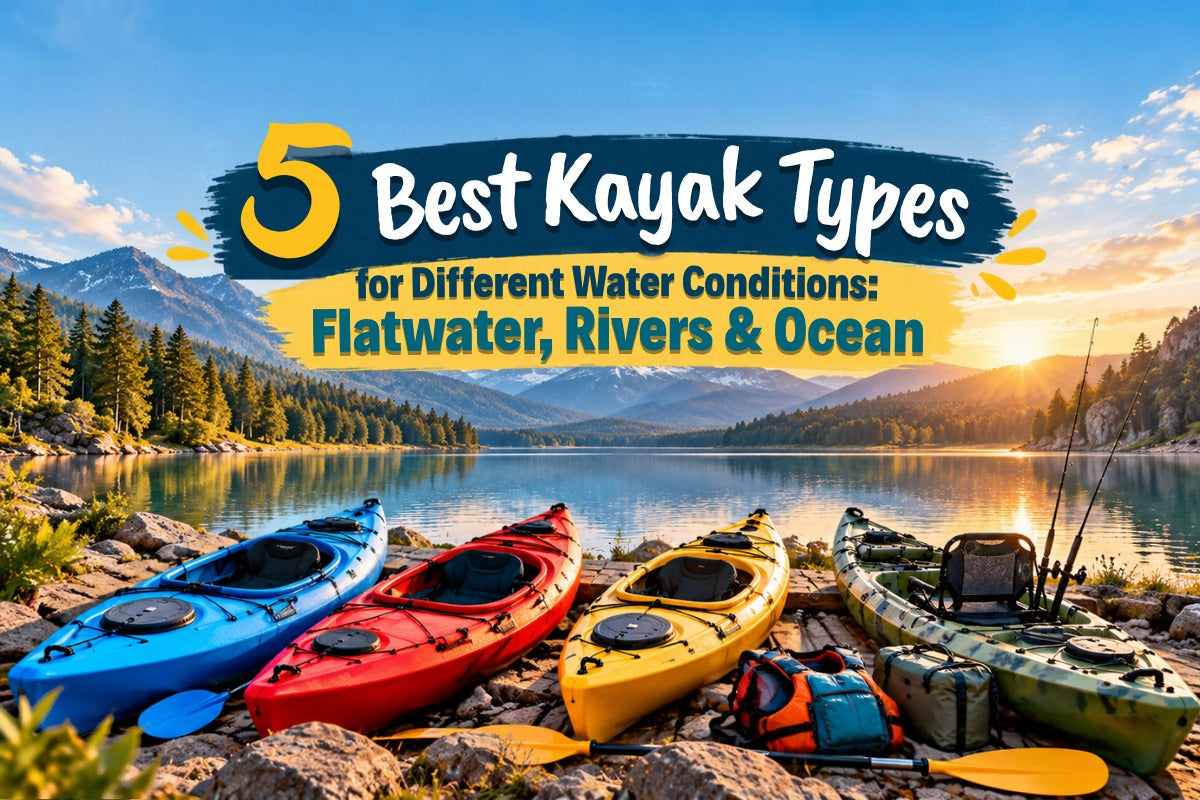
The best kayak depends heavily on where you plan to paddle. A stable recreational kayak that works well on a calm lake may not perform safely in fast-moving rivers or open ocean conditions. This guide explains five common kayak types and where each performs best. You’ll learn how water conditions, hull design, kayak length, seating configuration, and stability should influence your choice.
Quick Answer
The five best kayak types for different water conditions are recreational kayaks for calm flatwater, fishing kayaks for stable fishing-focused trips, touring and sea kayaks for longer coastal and open-water journeys, whitewater kayaks for rapids and technical rivers, and crossover kayaks for paddlers who want versatility across calm and moving water. Choosing the right type starts with matching the kayak's design to your typical water conditions and experience level.
What are the different types of kayaks?
Kayaks are designed for different environments, activities, and paddling styles. The five categories below cover many of the most common needs for recreational and adventure paddlers in the USA.
Recreational kayaks for flatwater
Recreational Kayaks are generally designed for calm lakes, ponds, protected waterways, and slow-moving rivers. They prioritize stability, ease of use, and comfort rather than extreme speed or technical maneuverability.
They are a strong choice for beginners, casual paddlers, and families who want straightforward kayaking without specialized equipment.
A wider recreational kayak can provide good initial stability, while a shorter length can make transportation and maneuvering easier.
Fishing kayaks for calm lakes and slow rivers
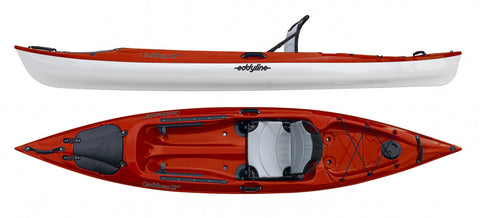
Fishing Kayaks are designed around anglers' needs. They typically offer features such as rod holders, tackle storage, elevated seating, gear mounting areas, and generous stability.
They can be particularly useful on lakes, ponds, reservoirs, and calm rivers where anglers need to reach productive fishing areas without using a larger boat.
When selecting a fishing kayak, consider not only stability but also weight capacity. Fishing equipment, coolers, and other gear can quickly add significant weight.
Touring and sea kayaks for ocean and coastal water
Touring & Sea Kayaks are designed for longer-distance paddling and more demanding water conditions. Their longer, narrower hulls generally provide better tracking and efficient movement over distance.
Sea kayaks are commonly used for coastal exploration and open-water paddling. They can provide better directional stability than shorter recreational models, although they require greater paddling skill and awareness of changing conditions.
For ocean use, consider factors such as wind, waves, currents, water temperature, cockpit design, and the kayak's ability to handle the expected conditions.
Whitewater kayaks for rivers and rapids
Whitewater Kayaks are specialized for moving water, rapids, and technical river environments. Their shorter, highly maneuverable designs allow experienced paddlers to make quick directional changes and respond to obstacles.
These kayaks are not intended to be general-purpose recreational boats. Whitewater paddling requires appropriate training, safety equipment, and knowledge of river hazards.
For beginners interested in whitewater, instruction and gradual progression into more challenging environments are important.
Crossover kayaks for versatile paddling
Crossover Kayaks combine characteristics of recreational and whitewater designs. They can be useful for paddlers who want one kayak capable of handling calm water and moderate moving-water environments.
They typically provide more maneuverability than traditional recreational kayaks while retaining enough stability for general paddling.
A crossover kayak can be a practical choice when your paddling locations vary, and you don't want a separate boat for every type of water.
How water conditions affect kayak choice
Water conditions influence stability, tracking, maneuverability, and safety. Before choosing a kayak, think beyond whether you are paddling on a lake, river, or ocean.
Flatwater
Flatwater includes calm lakes, ponds, and protected waterways with limited current and wave action.
For these conditions, recreational and fishing kayaks are often suitable. Stability, comfort, and ease of transport may be more important than high-speed performance.
Rivers
Rivers vary dramatically. A slow, wide river can resemble flatwater, while narrow rivers with strong current, rocks, and rapids require specialized equipment.
For gentle rivers, recreational or crossover kayaks may work well. Technical rapids call for purpose-built whitewater kayaks and appropriate experience.
Ocean and coastal water
Ocean conditions can change quickly. Wind, tides, waves, currents, and cold water create additional challenges.
Touring and sea kayaks are designed for longer-distance and coastal paddling, but boat selection alone does not eliminate risk. Paddlers should understand local conditions and have appropriate safety skills and equipment.
Sit-in vs. sit-on-top kayaks: which is better?
Neither configuration is universally better. The right choice depends on your activity, environment, and personal preference.
Sit-in kayaks place the paddler inside a cockpit. They can provide greater protection from splashing water and are common for touring and sea kayaking. They also allow paddlers to use a spray skirt in appropriate conditions.
Sit-on-top kayaks position the paddler above the hull. They are popular for recreational paddling and fishing because entering and exiting is relatively straightforward. They can also be convenient in warm-weather environments where getting wet is not a major concern.
For fishing and casual flatwater use, a sit-on-top kayak can be particularly convenient. For colder environments, longer trips, and conditions where protection from water matters, a sit-in design may be preferable.
What kayak length and hull design should you choose?
Kayak length and hull shape have a direct impact on performance.
Short kayaks
Shorter kayaks are generally easier to maneuver and transport. They can be useful for smaller waterways, recreational paddling, and situations where turning ability is important.
Longer kayaks
Longer kayaks generally track more efficiently and can maintain speed well over longer distances. This makes them common in touring and sea kayaking.
However, increased length can make transportation and tight-turn maneuvering more difficult.
Wider hulls
Wider kayaks generally provide greater stability and can be appealing to beginners and anglers. The trade-off can be reduced speed and efficiency.
Narrower hulls
Narrower hulls can provide better efficiency and speed but may require greater balance and paddling skill.
The best design is therefore a compromise between stability, maneuverability, tracking, and speed based on where you will paddle.
How to choose the right kayak for your water conditions
Start by identifying the water you will use most frequently rather than choosing a kayak based on a single occasional trip.
For flatwater: Choose a recreational or fishing kayak that prioritizes stability and comfort.
For slow rivers: Look for a recreational or crossover kayak with enough maneuverability to handle current and changing conditions.
For whitewater: Choose a purpose-built whitewater kayak and obtain appropriate training before paddling challenging rapids.
For coastal and ocean paddling: Consider a touring or sea kayak with suitable tracking, storage, and water-handling characteristics.
For mixed environments: A crossover kayak can provide greater versatility when you regularly move between calm and moderate moving water.
Also consider your body size, paddling experience, transportation options, storage space, weight capacity, and budget before making a final decision.
Kayak selection mistakes to avoid in the USA
Choosing a kayak only because it is inexpensive or visually appealing can lead to poor performance on the water.
One common mistake is buying a recreational kayak for conditions that require a more specialized design. A calm-water kayak should not automatically be assumed to be suitable for ocean waves or technical rapids.
Another mistake is ignoring transportation. A kayak that is excellent on the water may be difficult to load onto your vehicle or store at home.
Paddlers should also avoid exceeding the manufacturer's weight capacity. Always account for the paddler, equipment, water, food, and other gear.
Finally, don't confuse stability with suitability. A very stable kayak may still be inappropriate for a particular environment if its hull and overall design are not intended for those conditions.
Why choosing the right kayak matters for different USA waterways
The USA offers an unusually wide range of paddling environments, from small inland lakes and reservoirs to large rivers and coastal waters.
That variety makes kayak selection especially important. A beginner exploring a calm Virginia lake may need a very different kayak from an experienced paddler planning coastal trips or whitewater adventures.
Matching the boat to the environment can improve efficiency, comfort, and control while reducing the likelihood of taking an unsuitable kayak into challenging conditions.
The best approach is to choose based on your most common water conditions and then consider whether you need a specialized kayak or a more versatile design.
Common challenges or mistakes
Choosing based only on stability: Stability matters, but tracking, maneuverability, comfort, and intended water conditions also matter.
Using a flatwater kayak in demanding conditions: Recreational kayaks are not automatically suitable for rough ocean water or technical rapids.
Ignoring weight capacity: Overloading a kayak can affect handling and stability.
Buying without considering transportation: Check kayak dimensions and weight against your vehicle, storage space, and carrying ability.
Underestimating water conditions: Wind, current, waves, and temperature can make familiar waterways significantly more challenging.
Skipping safety preparation: The right kayak does not replace paddling skills, weather awareness, a properly fitted PFD, and other appropriate safety equipment.
When should you consider a specialized kayak?
A specialized kayak makes sense when your regular paddling environment demands specific performance characteristics.
Choose a fishing kayak if angling is your primary activity. Consider a recreational kayak for calm-water outings and casual paddling. A touring or sea kayak is more appropriate for longer coastal journeys. Choose a whitewater kayak for rapids and technical rivers, while a crossover kayak can work well for paddlers who regularly move between flatwater and moderate moving water.
The key is to buy for your most frequent conditions rather than selecting a kayak based solely on its versatility or appearance.
Conclusion
The best kayak type depends on where you paddle, what you do on the water, and how much performance you need. Recreational and fishing kayaks suit many calm-water activities, while touring and sea kayaks are designed for longer coastal journeys. Whitewater kayaks are built for technical rivers, and crossover kayaks offer flexibility across different environments. Before buying, evaluate water conditions, hull design, length, stability, weight capacity, storage, and your experience level. Matching these factors to your typical USA paddling environment will help you choose a kayak that is safer, more comfortable, and better suited to your adventures.
Contact Appomattox River Company today to find the right kayak for your next adventure.
Frequently asked questions
1. What is the best kayak for flatwater?
Recreational and fishing kayaks are generally good choices for calm lakes, ponds, and protected waterways.
2. What type of kayak is best for rivers?
Recreational kayaks suit calm rivers, while crossover or whitewater kayaks are better for rivers with stronger current and rapids.
3. What kayak is best for ocean paddling?
Touring and sea kayaks are generally designed for coastal and open-water paddling because of their tracking and efficient hull designs.
4. Are sit-in or sit-on-top kayaks better?
Sit-on-top kayaks are convenient for recreational and fishing use, while sit-in kayaks can provide better protection and control for touring and colder conditions.
5. Does kayak length affect performance?
Yes. Shorter kayaks are generally more maneuverable, while longer kayaks tend to track better and perform efficiently over longer distances.
6. Can one kayak handle different types of water?
A crossover kayak can provide versatility across flatwater and moderate moving water, but specialized conditions such as technical whitewater may require a dedicated kayak.