7 steps to choosing the right custom boat without making costly mistakes
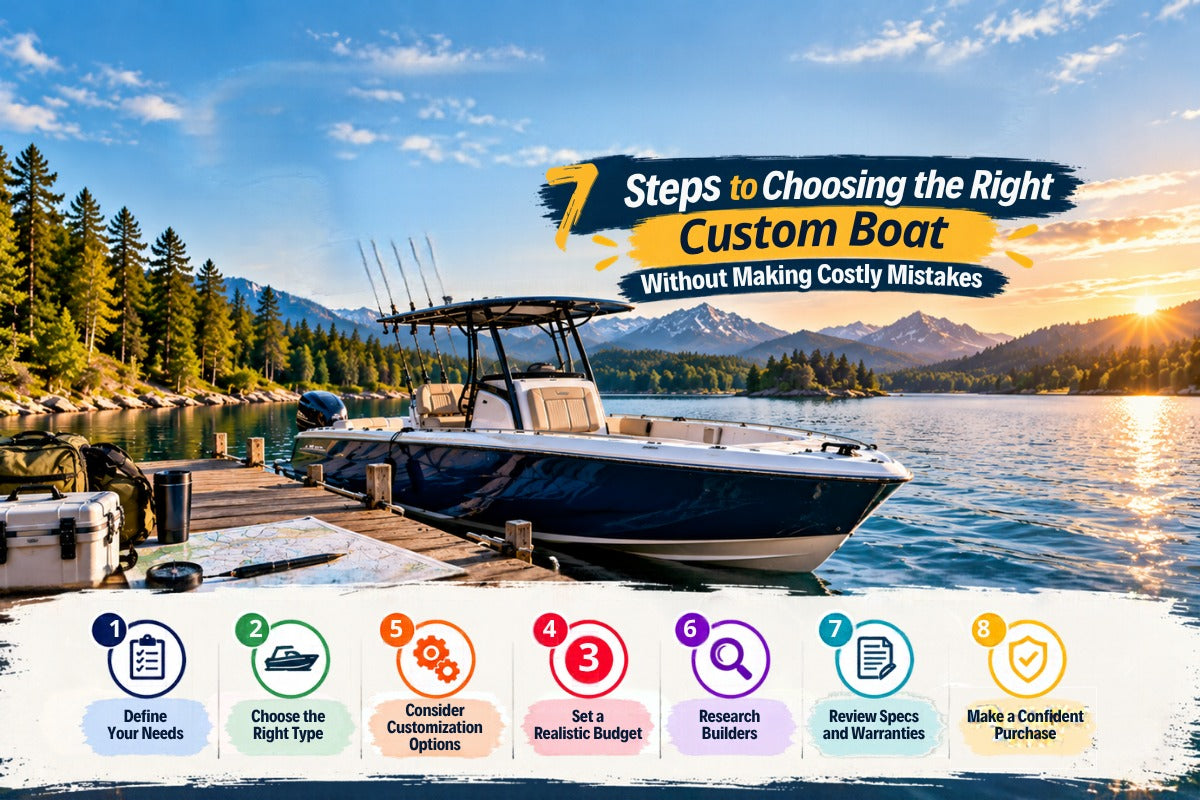
Choosing a custom boat is an opportunity to find a design that fits your paddling style, experience, and long-term goals. However, making the wrong decision about size, water conditions, seating, or transportation can lead to unnecessary expenses and an uncomfortable experience. Whether you're planning relaxing lake trips, fishing outings, or challenging river adventures, understanding your needs before you buy will help you make a more confident investment.
Quick answer
To choose the right custom boat, define how you will use it, identify your usual paddling locations, assess your experience, consider who will use it, establish a realistic budget, plan transportation, and prioritize the features that matter most. These seven steps help you narrow down suitable designs, avoid paying for unnecessary features, and select a boat that fits your paddling goals, physical requirements, and available storage space.
Why choose a custom boat?
A custom boat or customized paddling setup can help you find a better fit for your preferred activities, comfort requirements, and intended water conditions. Instead of choosing a model based only on its appearance or popularity, you can focus on the characteristics that will make the boat practical for your needs.
Depending on the available options, customization may involve seating arrangements, storage, accessories, outfitting, or other design considerations. The options vary by boat and manufacturer, so confirm which modifications are actually available before making a purchase.
A custom approach can be especially useful if you have specific requirements, such as carrying fishing equipment, accommodating multiple paddlers, or preparing for longer trips.
The key is to customize for practical benefits rather than adding features simply because they are available.
Step 1: Define how you will use the boat
Start by identifying the main activity you want the boat to support. Your intended use determines which design, dimensions, and features deserve priority.
Ask yourself whether you plan to:
-
Explore lakes and calm waterways.
-
Fish on rivers, lakes, or reservoirs.
-
Take longer paddling trips.
-
Navigate moving water and rapids.
-
Share outings with family or friends.
-
Use the boat for a mix of recreational activities.
Consider recreational kayaks for everyday paddling
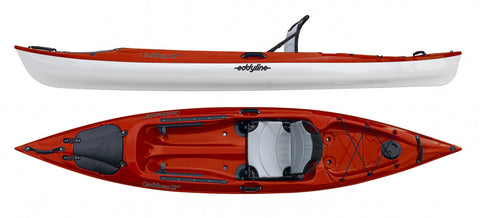
Recreational kayaks are generally suited to calm lakes, ponds, protected waterways, and gentle rivers. They are a practical starting point for casual paddlers who value comfort, stability and straightforward handling.
If most of your outings involve relaxed paddling rather than specialized adventures, a recreational design may provide everything you need without the cost or complexity of a more specialized boat.
Match features to your primary activity
Make a short list of the features you will actually use. For example, anglers may need accessible storage and mounting points, while longer-distance paddlers may prioritize efficient tracking, comfortable seating, and space for supplies.
Defining your primary activity first prevents you from paying for features that offer little practical value.
Step 2: Where will you paddle most?
The right boat depends on the water where you expect to use it. A design that performs well on a calm lake may not be appropriate for exposed coastal water or technical rapids.
Choose for rivers, lakes, or coastal conditions
Consider the conditions you are likely to encounter, including current, waves, wind, water temperature, and obstacles. Also think about how frequently you will paddle in each environment.
Whitewater kayaks are designed for maneuverability in moving water and rapids. They are not interchangeable with general recreational boats, and paddlers should choose suitable equipment and develop the necessary skills before entering challenging water.
For calm lakes, a recreational design may be more appropriate. For coastal trips, the boat should be suitable for the expected conditions and the paddler's experience.
Think about the water you use most in the USA
The USA offers a wide range of paddling environments, from inland lakes and slow-moving rivers to coastal waterways. Rather than buying for an occasional adventure, choose a boat that suits your most frequent conditions.
If you regularly visit different environments, consider whether one versatile design can meet your needs safely or whether your activities require a more specialized boat.
Step 3: How much have you paddled?
Your experience level should influence your choice just as much as your budget or preferred activity.
Beginners should prioritize comfort and control
If you're new to paddling, look for a boat that feels manageable, offers an appropriate level of stability, and is easy to handle in the conditions where you plan to use it.
Avoid buying an advanced design solely because it promises better speed or performance. A boat that requires more skill than you currently have may make learning less enjoyable.
Experienced paddlers may need specialized performance
Experienced paddlers often have clearer preferences regarding tracking, maneuverability, speed, storage, and handling. If you regularly paddle longer distances, your priorities may differ from those of someone who spends weekends exploring quiet lakes.
Touring kayaks can be worth considering for paddlers who want efficient movement over longer distances. Their design may provide advantages for extended trips, but the best choice still depends on fit, experience, and the conditions you expect to encounter.
Be realistic about your current abilities and the skills you intend to develop. Choose a boat that supports your goals without creating unnecessary handling challenges.
Step 4: Who's it for?
Before choosing a custom boat, identify everyone who will use it. A boat designed for one experienced paddler may not suit a family that wants to share casual outings.
Consider the following:
-
Solo paddling: Prioritize personal fit, manageable weight, and easy handling.
-
Family outings: Consider stability, accessibility, comfort, and the suitability of the boat for each intended user.
-
Fishing trips: Look for usable storage, seating comfort, and a suitable platform for your fishing setup.
-
Longer adventures: Consider legroom, seating support, gear capacity, and the ability to carry essential supplies.
-
Multiple users: Check whether the boat's dimensions, fit, and handling work for different paddlers.
Consider fishing kayaks for angling
Fishing kayaks are designed around the practical needs of anglers. Depending on the model, they may include rod holders, tackle storage, accessory mounting points, and seating designed for extended time on the water.
If several people will use the same boat for different activities, make sure the fishing-specific features will not compromise its usefulness for other paddling needs.
Always check the manufacturer's weight capacity and account for the combined weight of paddlers, equipment, and supplies.
Step 5: What's your budget?
A realistic budget helps you compare suitable boats without overspending on unnecessary upgrades.
However, the purchase price is only part of the total cost. You may also need a paddle, personal flotation device (PFD), transportation equipment, storage accessories, and other safety gear.
Calculate the total cost before buying
Create a budget that accounts for:
-
The boat and any customization.
-
Required paddling and safety equipment.
-
Roof racks, trailers, or carrying accessories.
-
Storage and maintenance.
-
Optional upgrades you genuinely need.
Ask whether a customization solves a real problem or simply adds expense. A practical setup that meets your needs is often better value than a more expensive boat with features you rarely use.
Compare value, not just price
When comparing models, consider durability, comfort, intended use, warranty coverage, and expected frequency of use. A lower-priced boat may be sufficient for occasional outings, while frequent paddlers may benefit from investing in features that improve their regular experience.
Set a spending limit before browsing so that attractive extras do not distract you from your essential requirements.
Step 6: How will you carry it?
Transportation is easy to overlook when comparing boats, but it can become one of the biggest practical challenges after purchase.
Before choosing a design, consider your vehicle, roof rack or trailer, storage area, and ability to lift and carry the boat.
Check weight and dimensions
A longer or heavier boat may offer useful performance advantages, but it can be more difficult to load, unload, and store. Make sure you can manage it safely or have a suitable transportation solution.
Measure your available storage space and check the boat's overall length, width, and weight. If you plan to transport it on a vehicle, confirm that your rack and carrying system are compatible with the boat.
Think about your complete paddling routine
Consider the distance between your vehicle and the launch point, whether you will paddle alone, and how you will store the boat between outings.
A boat that is easy to transport is more likely to be used regularly. If portability is a major concern, compare suitable lightweight designs and verify their weight and handling characteristics before buying.
Step 7: What matters most?
Once you understand your activity, environment, experience, users, budget, and transportation needs, rank your priorities.
Trying to maximize every feature at once can make the buying process confusing. Instead, decide which three or four characteristics matter most.
For example, a beginner may prioritize stability, comfort, and easy transport. An experienced touring paddler may focus on tracking, efficiency, and storage. An angler may put stability, gear access, and usable deck space first.
Consider crossover kayaks for versatility
Crossover kayaks are designed to combine characteristics of different kayak styles, often offering a compromise between recreational paddling and some moving-water capabilities.
They may be useful for paddlers who want flexibility across different environments. However, versatility does not mean that every crossover model is suitable for every condition.
Confirm the manufacturer's intended use and compare the boat's handling characteristics with your most frequent paddling locations.
Separate essential features from optional upgrades
Use two lists before making your final decision:
Must-haves: Features required for fit, comfort, capacity, safety, and intended use.
Nice-to-haves: Accessories or upgrades that improve convenience but are not essential.
This simple exercise helps you avoid overspending while ensuring that the boat meets your actual requirements.
Common custom boat buying mistakes to avoid
Even after comparing several options, it is easy to make a decision that looks good initially but proves impractical later.
Choosing based on appearance: An attractive design may not provide the right fit, capacity, or handling for your needs.
Ignoring water conditions: A boat suitable for calm lakes may not be appropriate for challenging rivers or exposed coastal environments.
Overlooking weight capacity: Always account for paddlers, gear, and supplies rather than considering body weight alone.
Adding unnecessary custom features: Extra accessories can increase cost and complexity without improving your experience.
Underestimating transportation: Check the boat's weight and dimensions before assuming it will fit your vehicle or storage area.
Ignoring personal comfort: Seating, legroom, and entry and exit should be considered before buying.
Failing to ask about customization limits: Not every manufacturer or model supports every modification. Confirm compatibility, availability, warranty implications, and any additional costs.
Buying beyond your skill level: Choose a design suited to your current ability and the conditions you can handle safely.
Skipping a hands-on assessment: When possible, try the seating position, check the fit, and ask knowledgeable staff about handling and intended use before making a final decision.
When should you consider a custom or specialized boat?
A custom or specialized boat may be worthwhile when standard options do not adequately meet your needs.
For example, you might need a particular seating arrangement, a specific combination of storage and accessories, or a design suited to a regular paddling environment. Customization can also make sense when comfort or transportation requirements rule out many standard models.
However, if a readily available boat already meets your needs, customization may not offer enough additional value to justify the cost.
Start by comparing suitable standard models, then identify the specific limitations that customization would solve. This keeps the decision practical and focused on measurable benefits.
Conclusion
Choosing the right custom boat starts with understanding how you will use it, where you will paddle, and what matters most to you. By following these seven steps, you can compare designs more confidently, establish a realistic budget, and avoid paying for features that do not support your goals. Remember to account for paddling experience, the needs of everyone using the boat, weight capacity, transportation, and storage before making a final decision. The best choice is one that fits your needs today and supports the adventures you plan to enjoy in the future.
Contact Appomattox River Company today to find the right boat for your paddling needs.
Frequently asked questions
1. What should I consider first when choosing a custom boat?
Start with your primary activity and the water conditions where you will use the boat most often. These factors help determine the suitable design, size, and features.
2. Is a custom boat better than a standard model?
Not always. Customization is useful when it solves a specific need, but a standard model may offer better value if it already meets your requirements.
3. How much should I budget for a custom boat?
Set a budget based on the boat, customization, safety equipment, transportation, and storage. Compare the total ownership cost rather than the purchase price alone.
4. Which boat is best for beginners?
A suitable recreational kayak is often a practical starting point for beginners paddling on calm water. The best choice depends on personal fit, intended conditions, and comfort.
5. Can one kayak be used for different water conditions?
Some crossover kayaks offer versatility across multiple environments, but no single design is ideal for every condition. Always check the manufacturer's intended use.
6. Why is transportation important when buying a boat?
The boat's weight and dimensions affect loading, carrying, and storage. Checking transportation requirements beforehand helps prevent practical problems after purchase.
Related Posts
Recreational canoes vs. whitewater canoes: 5 key differences to know
November 2, 2026

Used vs. new kayaks: Which option gives you the best value in 2026?
October 28, 2026

10 costly kayak buying mistakes to avoid before you spend your money
October 26, 2026

How to choose the right fishing kayak: 7 features that actually matter
October 20, 2026
