10 costly kayak buying mistakes to avoid before you spend your money
Buying a kayak can be a significant investment, especially when you start comparing recreational, fishing, touring, and specialized models. The wrong choice can leave you with an uncomfortable kayak, difficult to transport or poorly suited to your local water. Before spending your money, it is important to understand the most common kayak buying mistakes and know which specifications actually matter for your paddling needs.
Quick Answer
The most costly kayak buying mistakes include choosing the wrong kayak type, ignoring weight capacity, buying the wrong size, prioritizing price over suitability, overlooking transportation and storage, confusing stability with performance, ignoring seating comfort, buying unnecessary features, failing to consider your paddling environment, and skipping a proper inspection when buying used. The best approach is to match the kayak to your body size, experience, water conditions, activities, transportation needs, and budget.
1. Choosing the wrong type of kayak
One of the biggest mistakes is buying a kayak before deciding how and where you will use it.
Recreational kayaks are generally designed for calm lakes, ponds, and protected waterways. Fishing kayaks prioritize stability, storage, and angler-focused features. Touring kayaks are designed for efficient longer-distance paddling, while whitewater models are built for moving water and rapids.
Think about your primary activity first. A kayak designed for casual flatwater paddling may not provide the tracking, maneuverability, or handling you need for coastal or technical river environments.
2. Buying the wrong kayak size
Kayak length and width affect stability, maneuverability, tracking, and transportation.
A shorter kayak can be easier to maneuver and transport, while longer kayaks generally track more efficiently and can be better suited to longer trips. Width also matters because wider hulls typically provide more initial stability, while narrower designs can offer greater efficiency.
Your own height, weight, and legroom requirements should also influence your decision.
Why kayak dimensions matter
A kayak that feels cramped can quickly become uncomfortable during longer trips. At the same time, an oversized kayak may be unnecessarily difficult to transport and handle.
Before buying, check the manufacturer's recommended paddler size, cockpit dimensions, overall length, width, and weight.
3. Ignoring weight capacity
Weight capacity is more than your body weight.
You need to account for yourself, your paddle, PFD, water, food, fishing equipment, camping gear, and anything else you plan to carry.
For example, a kayak rated for a certain maximum load may technically support your body weight but leave very little capacity for equipment. Operating too close to the maximum can also affect handling and performance.
Always calculate your realistic total load before purchasing.
4. Choosing a kayak based only on stability
Stability is important, but it should not be the only specification you consider.
A very wide kayak may feel stable but could sacrifice some speed and efficiency. A narrower model may provide better tracking and paddling efficiency but require more balance and experience.
Stability vs. performance
Think about the type of stability you actually need. Beginners, anglers, and recreational paddlers may prioritize a stable platform, while touring paddlers may place greater importance on tracking and efficiency.
The goal is not to find the most stable kayak available. It is to find the right balance between stability, maneuverability, speed, and control.
5. Buying without considering transportation and storage
A kayak can be excellent on the water and still be a poor purchase if you cannot conveniently transport or store it.
Before buying, consider:
-
Vehicle compatibility
-
Roof rack or trailer requirements
-
Kayak weight
-
Carrying distance from your vehicle to the water
-
Garage or outdoor storage space
-
Whether you can safely lift the kayak
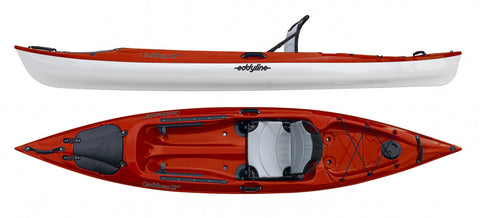
Considering Eddyline kayaks for transportation
Eddyline kayaks can be worth considering for paddlers who place a strong emphasis on manageable weight and transportation. When comparing lightweight models, don't look at weight alone. Consider length, carrying handles, storage requirements, and whether the kayak fits your vehicle and paddling routine.
6. Buying a kayak without thinking about your actual water conditions
A kayak should be matched to the water where you will use it most.
Calm lakes and ponds generally allow more flexibility, while rivers, coastal water, and open ocean environments can introduce stronger currents, wind, waves, and changing conditions.
Match the kayak to your local water
If most of your trips involve calm recreational paddling, a specialized touring or whitewater kayak may add cost without providing meaningful benefits.
On the other hand, using a basic recreational kayak in demanding conditions can create handling and safety problems.
Consider your typical waterway rather than buying for an occasional trip you may never take.
7. Paying for features you don't actually need
More features do not automatically mean better value.
Fishing kayaks may include extensive accessory mounting systems, rod holders, specialized seating, and pedal or motor compatibility. Touring kayaks may prioritize storage and efficient hull designs.
These features can be valuable when they match your needs, but unnecessary equipment can increase cost, weight, and complexity.
Old Town Loon kayak and feature priorities
The Old Town Loon kayak is an example of why intended use should come before feature lists. When comparing recreational models, focus on the features that will improve your actual paddling experience, such as seating comfort, stability, storage and maneuverability.
Don't pay extra for equipment that will spend most of its life unused.
8. Ignoring comfort and seating
A kayak that looks impressive on a product page may not be comfortable for your body.
Pay attention to:
-
Seat padding and adjustability
-
Back support
-
Footrest positioning
-
Cockpit dimensions
-
Legroom
-
Ease of entry and exit
-
Seating position
Comfort becomes even more important when you plan to spend several hours on the water.
A small difference in seat design or cockpit fit can have a major effect on your experience during longer paddling sessions.
9. Buying for your current skill level without considering your goals
Another common mistake is choosing a kayak that is either far beyond your experience or too limited for where you want to go next.
Beginners often benefit from predictable handling and easy stability rather than advanced performance characteristics.
More experienced paddlers may want better tracking, speed, maneuverability or specialized capabilities.
Wilderness Systems Tsunami 140 kayak and touring needs
The Wilderness Systems Tsunami 140 kayak represents the type of longer touring-oriented design that may appeal to paddlers looking for efficient distance paddling and greater performance than a basic recreational kayak.
The important lesson is not to buy a particular model simply because it is highly regarded. Instead, evaluate whether its design matches your experience, body size, typical water, and intended trip length.
10. Focusing only on the purchase price
The cheapest kayak is not always the best value.
Your total cost can include a paddle, PFD, roof rack, cart, storage equipment, transportation accessories, and other necessary gear.
A very inexpensive kayak that requires several upgrades may ultimately cost more than a slightly more expensive model that already meets your needs.
Look at total ownership value
When comparing kayaks, consider:
-
Purchase price
-
Included features
-
Required accessories
-
Durability
-
Warranty
-
Expected usage
-
Transportation costs
-
Resale value
A kayak that costs more initially may provide better value if it meets your needs for many years.
Kayak buying mistakes to avoid in the USA
Paddlers in the USA have access to an enormous range of waterways, from small inland lakes and reservoirs to large rivers and coastal environments. That variety makes choosing based on your actual paddling location especially important.
Don't assume a kayak that works well on a calm lake will perform equally well on a large river or exposed coastal water. Weather, current, wind, and water temperature can all change the demands placed on the boat.
You should also consider local transportation and storage conditions. A longer touring kayak may be excellent for extended trips but less practical if you have limited storage space or need to carry it significant distances.
Compare kayak designs before you buy
Comparing several kayak categories can help prevent an expensive mismatch.
Perception Carolina 14 kayak and recreational touring needs
The Perception Carolina 14 kayak illustrates why length and intended use deserve careful consideration. A longer recreational/touring-style kayak can provide useful tracking and efficiency for paddlers who want to cover more distance.
Before choosing a similar design, consider whether you actually need its length and performance characteristics or whether a shorter recreational kayak would better suit your typical trips.
Consider your complete setup
Don't evaluate the kayak in isolation. Think about your paddle, PFD, transportation system, storage solution, and other equipment.
A kayak should work as part of your complete paddling setup.
Common challenges when choosing a kayak
Too many options: Hundreds of models can make comparison overwhelming. Narrow your choices by activity, water conditions, and paddler size first.
Confusing marketing with performance: A long list of features does not automatically make a kayak better for you.
Underestimating transportation: Kayak weight and length can become major considerations after purchase.
Ignoring future use: Buying a kayak that only works for one narrow use can lead to another purchase later.
Choosing based on appearance: Color and styling matter less than fit, hull design, stability and intended use.
When should you consider a specialized kayak?
Consider a specialized kayak when your primary activity requires specific performance characteristics.
Fishing-focused paddlers may benefit from a dedicated fishing kayak with stability and equipment management features. Long-distance paddlers may prefer touring designs with efficient hulls and greater storage. Whitewater paddlers should choose kayaks specifically designed for rapids and moving water.
If you primarily paddle calm lakes and slow rivers, a versatile recreational kayak may provide better overall value than a highly specialized model.
Final checklist before buying a kayak
Before spending your money, ask these questions:
-
Where will I paddle most often?
-
What will I primarily use the kayak for?
-
Does the kayak fit my height and weight?
-
Is the weight capacity sufficient for me and my gear?
-
Is the kayak comfortable for several hours?
-
Can I transport it safely?
-
Do I have enough storage space?
-
Are the features actually useful to me?
-
Does the hull design match my experience level?
-
What will the complete setup cost?
If you can confidently answer all ten questions, you are much less likely to make a costly buying mistake.
Conclusion
The right kayak is not necessarily the most expensive, longest, lightest, or most feature-packed model. It is the one that fits your body, experience, budget, and intended paddling environment. Avoiding common mistakes such as ignoring weight capacity, choosing the wrong kayak type, overlooking transportation, or buying unnecessary features can help you get significantly better value from your investment. Take time to compare designs, understand your actual needs, and consider the total ownership cost before making your purchase.
Contact Appomattox River Company today to find the right kayak for your paddling needs.
Frequently asked questions
1. What is the biggest mistake when buying a kayak?
Choosing a kayak without considering where and how you will use it is one of the most costly mistakes.
2. How do I know what size kayak to buy?
Consider your height, weight, legroom, kayak dimensions, and intended use before choosing a size.
3. Is a more expensive kayak always better?
No. The best value comes from choosing a kayak whose features and performance match your actual needs.
4. Should beginners buy a specialized kayak?
Usually, beginners benefit from predictable, comfortable designs unless they already know they will focus on a specialized activity.
5. How important is kayak weight capacity?
Very important. Always account for your body weight plus your paddle, safety equipment, water, and other gear.
6. What should I check before buying a kayak?
Check the kayak's type, size, weight capacity, hull design, comfort, transportation requirements, storage needs, and total cost.